On this page
- How has the Saleh Bay whale shark population count changed by year?
- What does identified individuals mean?
- Why are most sharks male?
- How big are they?
- How big can whale sharks grow?
- How often do individuals return?
- What do these numbers mean for a visitor?
- What else do people ask about whale shark numbers in Saleh Bay?
- Which sources support this page?
- How do I reach the desk?
By Saleh Bay Whale Shark Editorial Desk
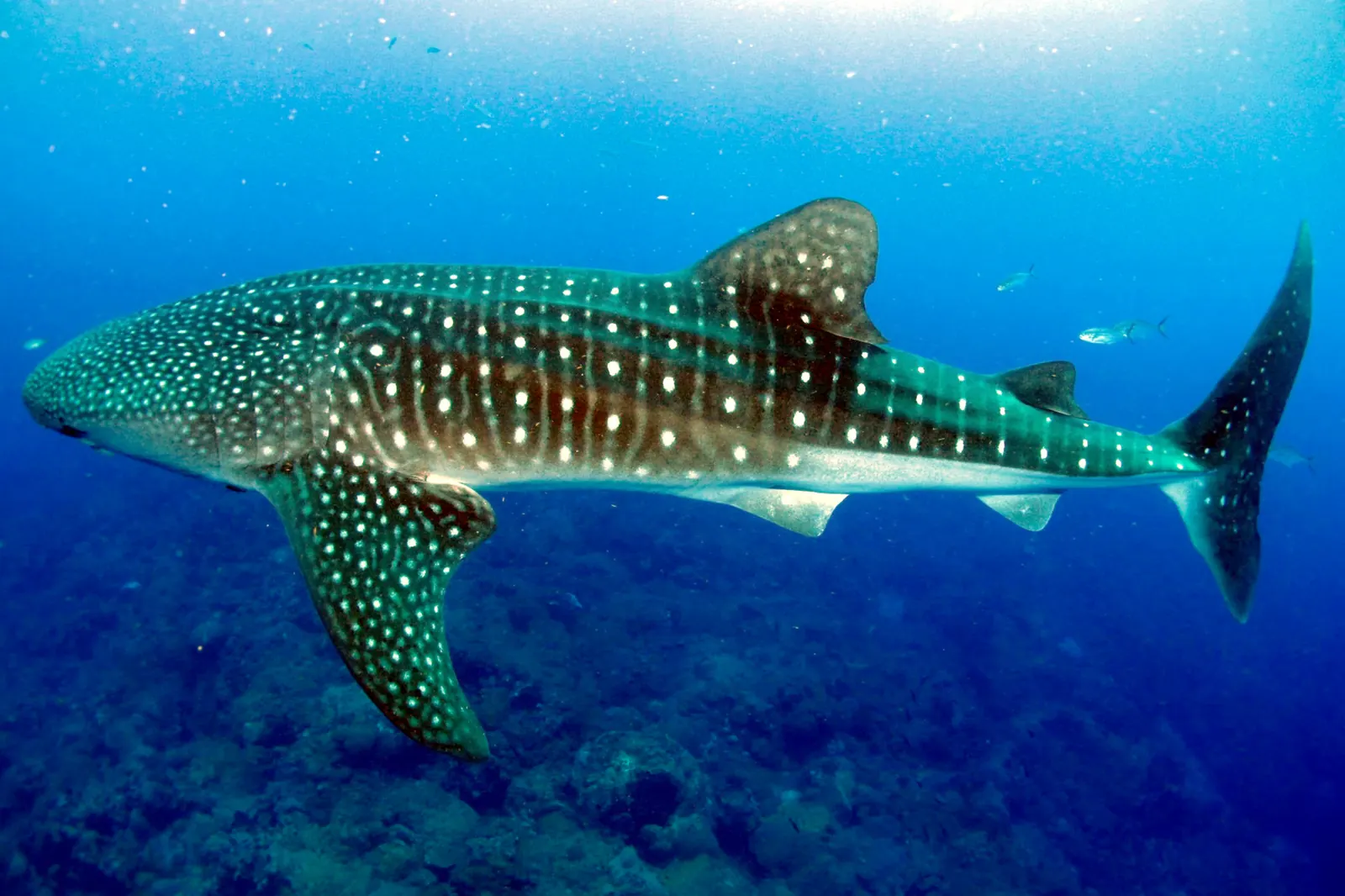
No source gives a headcount for the Saleh Bay whale shark population. The latest figure is Konservasi Indonesia's 174 individuals identified up to 2025, of which 137 are confirmed male. That total is a running list of recognised sharks, so it does not estimate how many live in the bay today, and earlier published counts differ for good reasons.
How has the Saleh Bay whale shark population count changed by year?
Each number below counts something slightly different, and some come from sellers instead of scientists. Read the "who is speaking" column before comparing any two rows.
| Published | Figure | Who is speaking | What it is |
|---|---|---|---|
| 2019 paper | 42 | IOP paper, citing Conservation International's unpublished data | Photo-identified individuals |
| May 2022 | At least 99 | Tempo; Amanwana, a resort, uses the same floor | Press figure, no method given |
| Period 2017 to 2022 | At least about 108 | Konservasi Indonesia assessment | Identified individuals |
| 2024 record | 112 | Kompas, citing a local operator | Operator figure quoted by the press |
| Undated | Around 125 | The Langkah Travel, an operator | Called a resident population; no supporting study available |
| 2025 paper | 105 | Frontiers in Marine Science | Photo-identified individuals, citing a 2025 paper that Konservasi Indonesia reports as about 108 |
| Up to 2025 | 174 | Konservasi Indonesia 2025 report | Identified through photo-identification and citizen science |
The climb from 42 to 174 is what you would expect from a list that only grows as more sharks are photographed and matched. More people taking pictures can raise it even if the number of sharks stays flat, so it says little about whether the population is rising. Globally, the IUCN Red List shows the species' population as decreasing, and that trend cannot be read across to one bay in either direction.
The 105 and the 108 trace to the same 2025 research paper, cited by Frontiers at 105 and reported by Konservasi Indonesia as about 108. With no stated reason for the gap, both stay in the table.
Take care with rankings. Tempo called the bay the second-largest population location, a phrase that makes sense at national level at most and only in terms of identified individuals. Amanwana's wording goes further and claims a world ranking, which this guide does not repeat.
What does identified individuals mean?
It means researchers matched photographs to recognise an animal as one they have or have not seen before. The tally is cumulative, and a shark photographed once several years ago still counts today. It differs from a population estimate, which would try to work out how many animals are present, and it differs again from what you may see from a boat.
A short field study shows the gap well. A 2021 study from November 2019 to January 2020 recorded 39 sharks and produced 24 photo-IDs, and those two numbers should not be swapped.
Scale adds another limit. West Nusa Tenggara's fisheries head, quoted by Antara, gives the bay as 1,459 square kilometres and 282 kilometres long; other published areas differ, as our Saleh Bay whale shark overview explains. A list built from photographs cannot include sharks that nobody photographed. Tracking adds a different view of where they go, and our page on satellite tagging covers it.
Why are most sharks male?
Konservasi Indonesia's 174 break down into 137 confirmed males (79%), 16 females (9%) and 21 of unidentified sex (12%). The 2021 field study found the same skew in a far smaller group: 23 males and one female. Antara, quoting Konservasi Indonesia, also describes the young sharks as mostly male.
A young male-biased group is the fact to hold on to, and any explanation you read on a tour page is a guess until someone tests it. Females may be undercounted among the 21 unknowns, though even if every one of those were female, males would still far outnumber them.
How big are they?
Published Saleh Bay whale shark size figures run smaller than the record books suggest, and the sources do not agree on the average.
| Source | Size given | Basis |
|---|---|---|
| IUCN shark specialist group factsheet | Average 512 ± 112 cm total length | 108 identified individuals; 99% juveniles or sub-adults |
| 2021 study | 2.5 to 7 m, average 4.86 m | 39 sharks, November 2019 to January 2020 |
| Antara, quoting Konservasi Indonesia | Average about 6 m | Press summary, young sharks in the bay |
| Dive Happy, one page | Typically 3 to 4 m | Observation by a dive publisher |
| Dive Happy, another page | 4 to 7 m | Observation by the same publisher |
The strongest figure here is the factsheet's, because it states its sample and its spread. Its 99% juvenile or sub-adult finding is also the reason young sharks dominate this bay's story. Very small animals are a separate and newer matter, which our page on baby whale sharks covers.
How big can whale sharks grow?
Far beyond anything those tables show. Wikipedia calls the whale shark the largest known living fish, with 18.8 metres as the largest reliably recorded length. The Convention on Migratory Species says adults measure up to 13 metres, with accounts of up to 18. Sexual maturity comes at around 8 to 9 metres, per Wikipedia, from limited evidence mostly based on males.
Set that maturity length against the bay's averages and the juvenile label makes sense: the typical shark here has not reached it. Lifespan is less certain still. Wikipedia gives 80 to 130 years, Antara about 70, and The Langkah Travel 70 to 100, so treat any single figure with caution.
How often do individuals return?
Many do, across years. The IUCN factsheet reports 76% of individuals resighted across multiple years, with an average of 1.67 years between observations and a maximum of 5.12 years. Frontiers gives 77% for the same site. Antara, quoting Konservasi Indonesia, says 77% return several times in five to six years, some up to ten times.
Return and residence are different things. A shark seen in two different years may have spent most of the time between them somewhere else, so a return rate cannot tell you how many sharks are in the bay this week.
What do these numbers mean for a visitor?
They tell you that sharks use this bay repeatedly over years. They do not put more sharks under your boat. A list of 174 is compatible with a morning that shows you none, and the page on whether sightings are guaranteed looks at that evidence separately.
Two reading habits help when you compare trips. First, ask of any number who counted, over what period, and whether the figure means individuals or sightings. A seller's "resident population" and a research group's identified list can sit a long way apart and still both be sincerely stated. Second, treat a claim about ranking with suspicion until it names the place it is ranked against and the measure used.
Konservasi Indonesia credits citizen science alongside photo-identification, which suggests that photographs taken in the water can feed this kind of list. Keep any such photography within the local rules, which Kompas reports prohibit camera lights.
What else do people ask about whale shark numbers in Saleh Bay?
How many whale sharks live in Saleh Bay?
No source gives a headcount. Konservasi Indonesia reports 174 individuals identified up to 2025, a cumulative list of recognised sharks. Some of those may be elsewhere at any given time, and others may never have been photographed.
How big are the whale sharks in Saleh Bay?
An IUCN factsheet gives an average of 512 cm, plus or minus 112 cm, across 108 identified sharks. A 2021 study found 2.5 to 7 metres. Antara, quoting Konservasi Indonesia, gives an average of about six metres.
Are Saleh Bay whale sharks mostly male?
Yes. Of 174 identified individuals, Konservasi Indonesia confirmed 137 as male, 16 as female and 21 as of unidentified sex. That male share is about 79% of the list.
Why are most Saleh Bay whale sharks juveniles?
The published sources record it without explaining it. The IUCN factsheet reports 99% juveniles or sub-adults among 108 sharks. Researchers suggest the bay may also be an early nursery area, though that has not been confirmed.
How big do whale sharks get?
Wikipedia gives 18.8 metres as the largest reliably recorded length. The Convention on Migratory Species says adults reach up to 13 metres, with accounts of up to 18 metres.
Which sources support this page?
- IOP Conference Series: 2019 paper on Indonesian whale shark tourism
- Tempo: Sumbawa to develop whale shark ecotourism
- Amanwana: whale shark excursion (resort)
- Konservasi Indonesia: early assessment of population, habitat and economic value
- Kompas: whale shark tourism in Saleh Bay
- The Langkah Travel: Saleh Bay whale shark guide (operator)
- Frontiers in Marine Science: 2025 paper on Indonesian whale shark aggregations
- Konservasi Indonesia: 2025 whale shark report for Saleh Bay
- IUCN Red List: whale shark
- IOP Conference Series: 2021 study of whale sharks at Saleh Bay bagans
- Antara: West Nusa Tenggara on protecting key species in Saleh Bay
- IUCN shark specialist group: Saleh Bay Important Shark and Ray Area factsheet
- Antara: keeping whale sharks and people in balance in Saleh Bay
- Dive Happy: Saleh Bay whale sharks
- Dive Happy: Sumbawa whale sharks
- Wikipedia: Whale shark
- Convention on Migratory Species: whale shark
How do I reach the desk?
Corrections to any count on this page, with a source, are welcome on WhatsApp +62 811-3941-4563 or by email at bd@juaraholding.com. So are questions about what these numbers mean for a trip you are planning. Because a request may become a paid booking, we have a commercial interest, which the about page explains.
Send the desk your dates and starting point. The desk replies in writing.
Ask the desk on WhatsApp bd@juaraholding.com