On this page
By Saleh Bay Whale Shark Editorial Desk
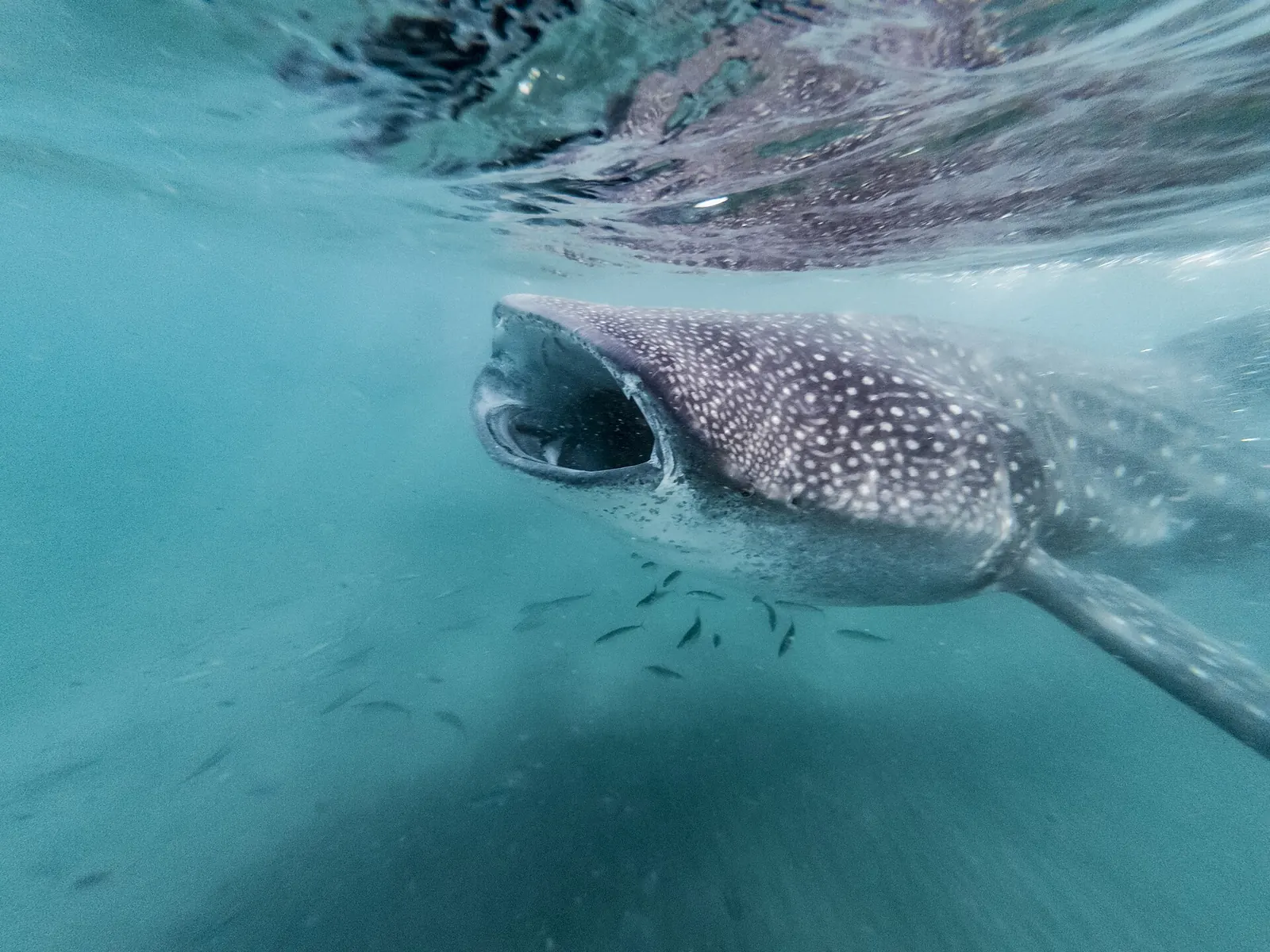
What do whale sharks eat in Saleh Bay? Sources name krill, small pelagic fish, and tiny shrimps called masin or rebon, often taken at bagan nets in the morning. They also forage deeper. An IUCN factsheet says they presumably chase sergestid shrimps in the afternoon, and a 2024 survey recorded sharks pursuing fish larvae and zooplankton at 20 to 100 metres.
What do whale sharks eat in Saleh Bay?
Worldwide, the whale shark diet is a filter feeder's. National Geographic describes it feeding on plankton and small fish near the surface, and Wikipedia lists plankton, krill, fish eggs and small schooling fish such as sardines and anchovies, with over 6,000 litres of water processed per hour. Saleh Bay sources get more specific.
| Food named | Where and when | Who says so |
|---|---|---|
| Krill and small pelagic fish | Mornings | IUCN shark specialist group factsheet |
| Baitfish sucked from the outside of the net | At bagans, seen regularly | IUCN factsheet |
| Krill, and a small shrimp the local language calls masin | Named among bagan catches that end up as whale shark food | 2021 study |
| Small fish and rebon shrimp that fishers do not take home | Sharks crowd bagans for these | Antara |
| Sergestid shrimps, "presumably" | Afternoon, after moving down the water column | IUCN factsheet |
| Fish larvae and zooplankton | 20 to 100 metres, by day and night | Konservasi Indonesia, 2024 expedition |
The names overlap. Masin and rebon both refer to small shrimp in these accounts, and the factsheet says bagans target small pelagic fishes and sergestid shrimps. We are not able to say from these sources whether all three names cover the same animals, so we keep them separate.
No diet study based on stomach contents or tissue from Saleh Bay is among the sources used here. Most of the list rests on what people see at nets, which tells you what sharks do where people can watch them.
What feeds the food chain?
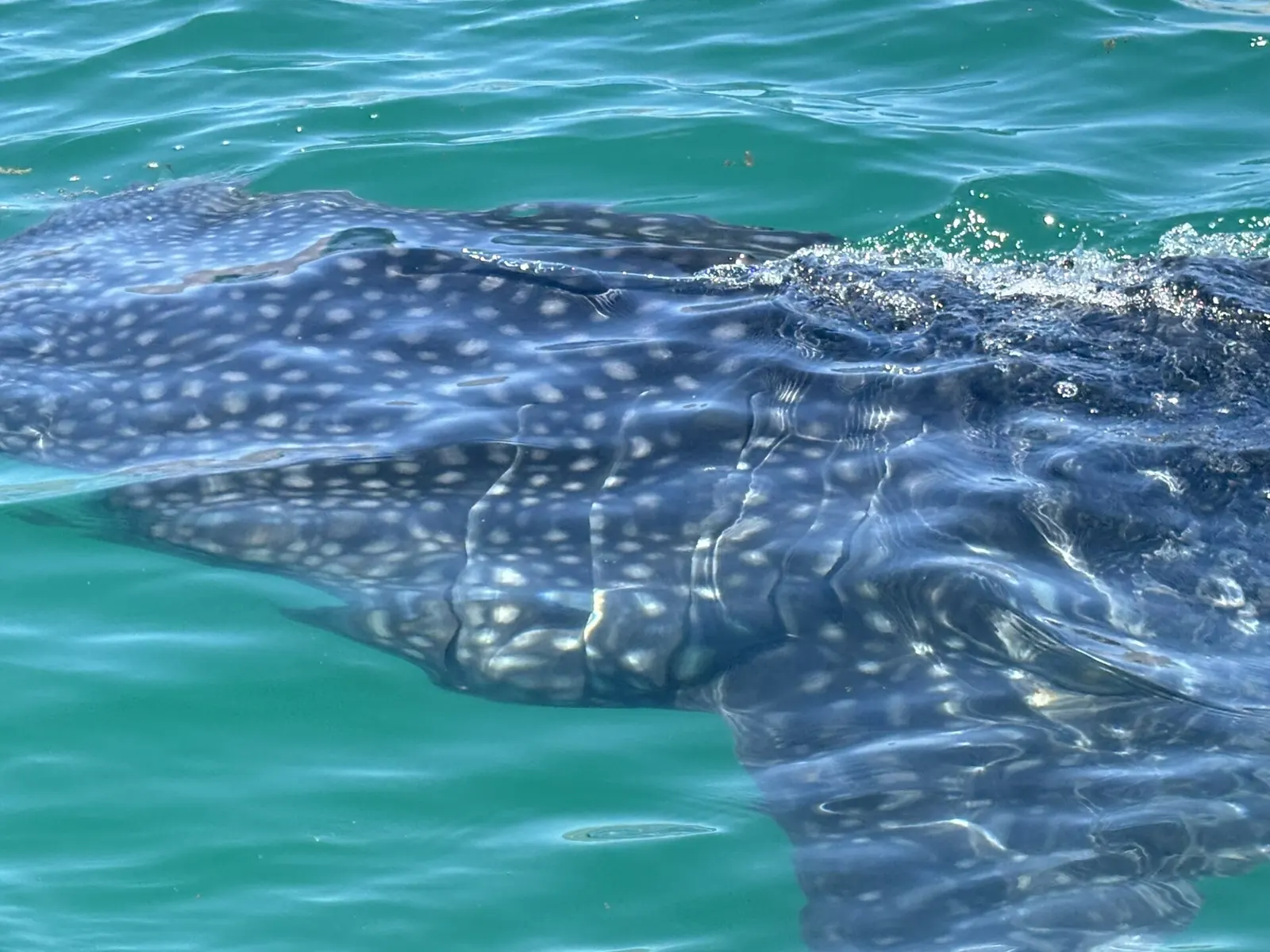
Three features of the bay work together in the accounts available. Shape comes first. The factsheet calls it a semi-enclosed embayment joined to the Flores Sea, set among small islands, reefs, seagrass and mangroves. The BBC calls it a near-perfectly enclosed cove fed by a narrow channel that draws cool, rich water from the deep ocean.
Then comes the water supply. The factsheet attributes the bay's high productivity to river inputs year-round and seasonal upwellings produced by monsoon winds.
The third is where the food concentrates. Konservasi Indonesia's expedition found more larvae and zooplankton in the bay's east and south, an area proposed for conservation. A 2025 paper gives chlorophyll-a readings of 0.20 to 3.45 mg/m³ where whale sharks were sighted. Chlorophyll-a is a common stand-in for how much microscopic plant life is in the water, and that spread suggests sharks were sighted in quite different water. It does not on its own show why a given shark chose a spot.
Do they feed only at nets?
No. Three lines of evidence point that way.
- History. Local ecological knowledge, the IUCN factsheet says, has these sharks feeding here long before the bagan fishery, as our bagan page sets out, which supports a natural origin for the feeding. That is local memory, recorded by scientists, and it does not show that no baiting happens today.
- Acoustic survey. A 2024 expedition's acoustic survey logged more than seven sharks chasing fish larvae and zooplankton between 20 and 100 metres, day and night, which Konservasi Indonesia reads as natural foraging beyond the nets.
- Tags. Accelerometer data from two sharks showed vertical foraging in 39% of tracking time over 56 days. Those are unpublished data cited by the factsheet, from a very small sample.
The bay's depth makes this plausible. Seabed depths at the coordinates of one study's 2019 to 2020 trips ranged from 36 to 81.5 metres, so there is plenty of water beneath the nets. For how a working net becomes a feeding station, see our page on Saleh Bay bagans. Whether tourism changes that balance is the difficult part, and no study measuring it for Saleh Bay was available. Our page on the ethics of Saleh Bay whale shark tourism takes that up.
What happens later in the day?
The sharks leave the nets, and then the evidence thins. In a 2021 study, they had gone from the bagans by about 09:00, having been there since about 05:00. The 2025 paper reports observations in the same hours. Those are the hours after a night's fishing under lights, and also when visiting boats arrive.
The factsheet says they then vertically migrate to feed, presumably on sergestid shrimps, in the afternoon. "Presumably" is the source's own word and it should stay attached. Nobody in these sources has shown you the shrimp in the shark at that hour. It would be just as careless to assume a shark that has disappeared from the surface has stopped feeding, because two sharks' depth records suggest some keep feeding.
How do mangroves fit in?
A researcher told the BBC that krill abound because mangrove ecosystems surround the bay. It is an expert's explanation in a news article, and the factsheet does list mangroves among the bay's habitats, but nothing here measures the link. Treat it as a reasonable hypothesis: mangroves are part of the system that feeds the bay, along with rivers and upwelling, and we cannot say how much of the krill depends on them.
It does matter for visitors thinking about the bay's future. If the explanation is right, whale shark tourism depends in part on coastline beyond the platforms. That is a reason to care about what is happening along the shore, as well as what happens around boats.
What else do people ask about whale shark food here?
What do whale sharks eat in Saleh Bay?
Krill, small pelagic fish and small shrimps are named most often, with larvae and zooplankton recorded at depth. Most of this comes from sightings at bagan nets and from one acoustic survey.
Why do whale sharks come to Saleh Bay?
Food is the main explanation in these sources. The IUCN factsheet links the bay's productivity to rivers and monsoon upwelling, and bagan nets add a concentrated supply of small fish and shrimp in the morning.
Do they feed only at bagans?
No. A 2024 acoustic survey recorded sharks pursuing larvae and zooplankton at 20 to 100 metres, and local knowledge cited by the IUCN factsheet describes feeding in the area before the bagan fishery.
What makes Saleh Bay so productive?
The IUCN factsheet credits year-round river inputs and seasonal upwelling driven by monsoon winds. The BBC adds a narrow channel drawing in cool, rich water, and a researcher it quotes links abundant krill to mangroves.
Do whale sharks eat fish from fishing nets?
Yes, in the sense that the IUCN factsheet says they are regularly seen sucking baitfish from the outside of bagan nets, and Antara describes them taking the small fish and rebon shrimp that crews leave behind.
Which sources support this page?
- National Geographic: whale shark
- Wikipedia: Whale shark
- IUCN shark specialist group factsheet: Saleh Bay Important Shark and Ray Area
- 2021 study of whale sharks at Saleh Bay bagans (IOP)
- Antara: whale sharks and people in Saleh Bay
- Konservasi Indonesia: 2024 expedition report
- BBC Future, August 2026
- Geographia Technica, 2025: Saleh Bay whale shark habitat
How do I reach the desk?
If you can correct our reading of any paper here, write to bd@juaraholding.com or use WhatsApp +62 811-3941-4563. The same desk fields trip questions, and the about page describes its commercial side. It cannot tell you what a shark will be doing on a given morning.
Send the desk your dates and starting point. The desk replies in writing.
Ask the desk on WhatsApp bd@juaraholding.com