On this page
- Who tagged whale sharks in Saleh Bay?
- What did the tracking show?
- Where do tagged sharks travel?
- How does tracking shape protection?
- Do fin tags harm the sharks?
- What are the limits of whale shark satellite tagging in Indonesia?
- Can a visitor sponsor a satellite tag?
- What do readers ask about tagging?
- Which sources support this page?
- How do I reach the desk?
By Saleh Bay Whale Shark Editorial Desk
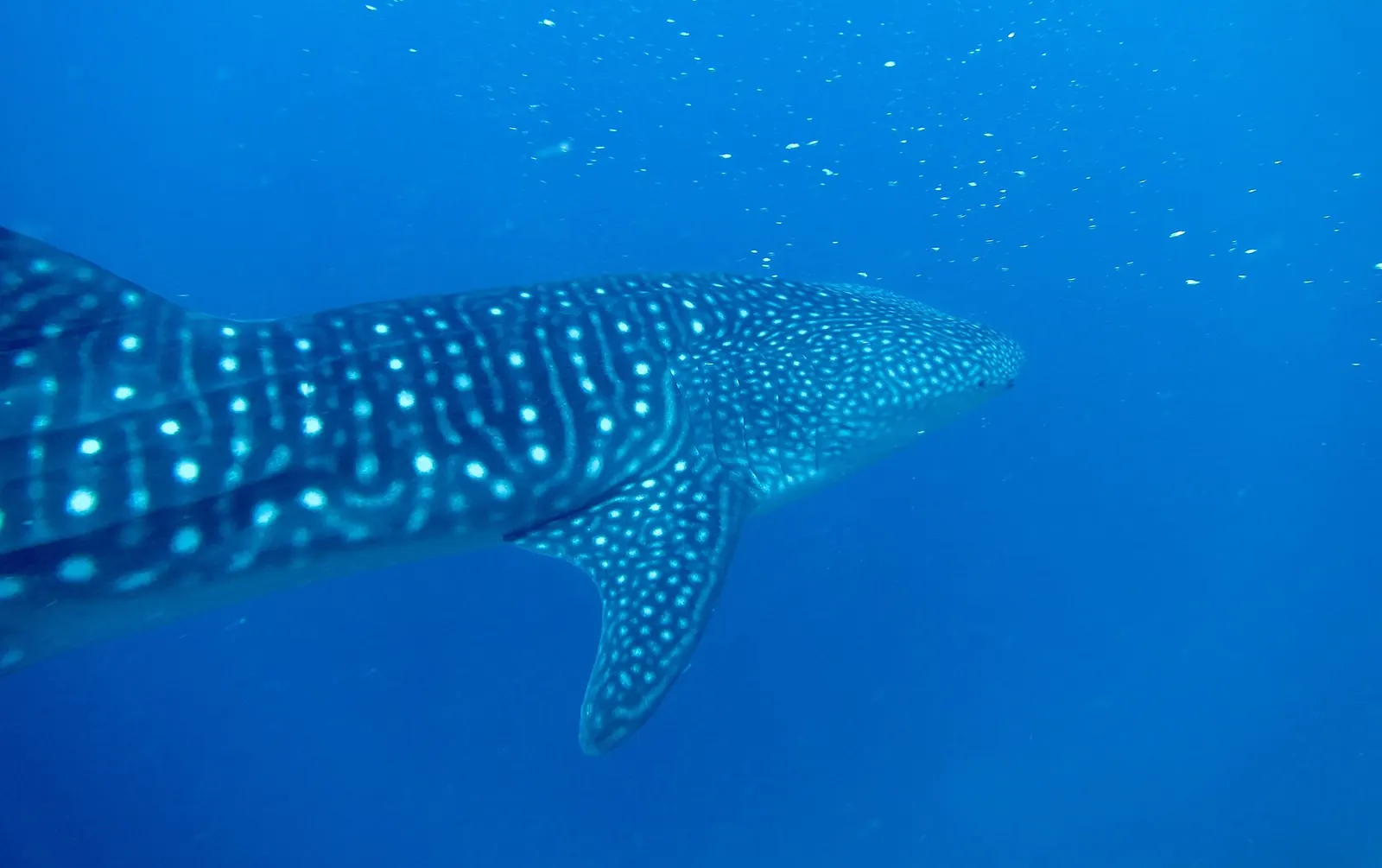
Whale shark satellite tagging in Indonesia produced its longest records in Saleh Bay. A Frontiers paper covering 2015 to 2025 tracked 70 sharks nationally, about a third of them tagged in the bay, and those averaged 472 days. Tracked sharks crossed into many countries' waters, and the data shaped plans for a protected area.
Who tagged whale sharks in Saleh Bay?
Mongabay quotes a lead author from Konservasi Indonesia, and Amanwana's trade guide describes a team attaching transmitters in an adoption run with Konservasi Indonesia, but neither credits each Saleh Bay deployment by name. The firm record is the study itself: a paper in Frontiers in Marine Science, published on 30 April 2026. It uses satellite tracking from 2015 to 2025 for 70 whale sharks tagged at Indonesian sites including Saleh Bay. Press coverage from Mongabay, AFP in The Jakarta Post and the BBC followed.
The paper and the BBC disagree on a basic number. The paper lists Saleh Bay tags on 21 large juvenile males, one adult male and two juvenile females, which makes 24. The BBC says 25 were tagged there. One tag is a small gap, and it could come from different counting rules or a tag excluded from the analysis, but neither source explains it, so 24 here refers to the paper's figure.
| Measure | Saleh Bay figure | Source |
|---|---|---|
| Sharks tagged | 24 in the paper; 25 according to the BBC | Frontiers 2026; BBC |
| Sex and stage in the paper | 21 large juvenile males, 1 adult male, 2 juvenile females | Frontiers 2026 |
| Argos locations | 5,174 of 10,958 across all sites | Frontiers 2026 |
| Average tracking duration | 472 days, the longest of the sites | Frontiers 2026 |
| Modelled suitable habitat | 91% of the bay | Frontiers 2026 |
What did the tracking show?
Saleh Bay turned out to be the richest source of data in the study. It yielded the most Argos locations, close to half the study's total, and the longest tracking durations. An average of 472 days is more than a year per animal, and AFP says some sharks were tracked for nearly three years. Mongabay says tags of this type can deliver up to three years of data.
The finding that matters most to anyone reading about the bay is a pair of statements that seem to pull apart. The paper identifies Cenderawasih Bay and Saleh Bay as persistent year-round habitats, and it also says that individual residency is variable and generally short. Both can be true. A place can hold whale sharks in every month while any single animal comes and goes. So a year-round habitat is a claim about the site, and it should not be read as meaning the same sharks are always there. For the separate question of how many individuals use the bay, see how many whale sharks live in Saleh Bay.
The paper also says 91% of Saleh Bay was identified as suitable habitat. A high figure like this comes from a model, and the paper itself warns about the foundations of some of its models, as the limits section below explains.
Where do tagged sharks travel?
A long way. AFP reports that tracked sharks moved through the waters of 13 countries and the high seas.
The paper also says sharks from Saleh Bay were the main users of the southeastern Indian Ocean among the tagged groups. Saleh Bay whale shark migration is thus not only a matter of moving between Indonesian bays. Some of these animals leave Indonesian waters for open ocean, which means a protected bay covers only part of their range.
As a general statement about the species, Antara reports that whale sharks can migrate more than 15,000 kilometres and dive to 2,000 metres. Those are species figures from a press report. They were not measured on the Saleh Bay tags in the paper.
How does tracking shape protection?
Mongabay says the data shaped government plans for a whale shark protected area in Saleh Bay. The value is easy to see. Tracks and habitat models show where animals concentrate and how much time they spend there, which is the kind of evidence a boundary needs. The practical status of that protection is a separate matter, covered on the page on the Saleh Bay conservation area.
The tracks also make the limit of local protection plain. If an animal tagged in the bay spends time across several national waters and on the high seas, a rule in Sumbawa protects it only while it is in Sumbawa. Nothing in the data argues against the local measure, though it does show why a single bay cannot do the whole job.
Finer behavioural data exists too. The IUCN shark specialist group factsheet cites accelerometer data from two sharks showing vertical foraging in 39% of tracking time over 56 days. This is unpublished data from just two animals, so it points to deep feeding as a real behaviour and offers no population-wide rate.
Do fin tags harm the sharks?
Published sources do not settle this. Mongabay reports two positions that answer slightly different questions. The study's blood tests showed no stress difference during tagging, which addresses the short-term effect of the procedure. An outside scientist warns that long-term fin-mounted tags can permanently damage fins, which addresses what a tag does over years.
| Position | What it measures | What it leaves open |
|---|---|---|
| No stress difference in blood tests, per the study as reported by Mongabay | Physiology at the time of tagging | Damage or drag over the months a tag stays on |
| Long-term fin tags can permanently damage fins, per an outside scientist in Mongabay | Possible lasting physical harm | How common or how serious this is among the Saleh Bay animals |
The longest records in this study are also the ones where the second concern would apply most, since a fin-mounted tag that transmits for nearly three years has been on the fin for that long. If that warning applies to these tags, the longest records carry the most of it.
What are the limits of whale shark satellite tagging in Indonesia?
The paper states its own main caveat: some models rest on only one or two individuals. Results built on so few animals can describe those animals well and still say little about the population.
The sample carries a second limit that readers can see in the numbers. Of the 24 Saleh Bay tags in the paper, 21 were on large juvenile males. The tracks therefore tell you mostly about young males. Adult animals and females barely appear, so the routes and durations should not be assumed to hold for them. This is our reading of the sample, not a statement from the paper, though the composition is the paper's own.
Finally, the record ends in 2025. Later changes in fishing, tourism or protection in the bay are outside what these tracks can show. Visitors should also take care with the leap from science to trip planning. Tags showing sharks use the bay all year do not predict what you will see on your morning out, and the reports cited here offer no sighting rate.
Can a visitor sponsor a satellite tag?
One resort sells a version of this. Amanwana's trade guide describes a whale shark adoption with Konservasi Indonesia. A team attaches a satellite transmitter to the dorsal fin, and batteries last about two years. Adopters get a certificate, updates every three months, a naming right and a tracker. It is a seller's description, so ask Amanwana or Konservasi Indonesia whether the scheme still runs and what it costs. The fin warning above applies to this kind of tag as well.
What do readers ask about tagging?
How are whale sharks tracked in Saleh Bay?
Researchers fit satellite tags, and locations are collected through the Argos system. A Frontiers paper covering 2015 to 2025 uses this data for 70 sharks tagged in Indonesia. An IUCN factsheet also cites accelerometer data from two sharks.
Where do Saleh Bay whale sharks go?
AFP reports tracked Indonesian sharks moved through the waters of 13 countries and the high seas. The Frontiers paper says Saleh Bay sharks were the main users of the southeastern Indian Ocean among tagged groups.
How long were Saleh Bay whale sharks tracked?
The Frontiers paper reports an average of 472 days for Saleh Bay tags, the longest of the sites studied. AFP says some sharks were tracked for nearly three years, and Mongabay says tags can deliver up to three years of data.
Do tags hurt whale sharks?
It is debated. Mongabay reports that the study's blood tests showed no stress difference during tagging, while an outside scientist warns that long-term fin-mounted tags can permanently damage fins. The first concerns the procedure and the second concerns years of wear.
How deep do whale sharks dive?
Antara reports that whale sharks can dive to 2,000 metres, as a general figure for the species. In Saleh Bay, an IUCN factsheet cites unpublished accelerometer data from two sharks showing vertical foraging in 39% of tracking time over 56 days.
Which sources support this page?
- Frontiers in Marine Science 2026: tracking paper
- Mongabay: 10-year satellite study
- AFP in The Jakarta Post: decade-long study
- BBC Future: the giant shark that seems to appear from nowhere
- Antara: whale sharks and people in Saleh Bay
- IUCN shark specialist group factsheet: Saleh Bay
- Amanwana: whale shark experience trade guide (resort)
How do I reach the desk?
The desk handles trip requests and source corrections. If you are planning a visit because of this research, say so and ask what is possible. Requests may lead to a paid booking, so we have a commercial interest. No tour, sighting or research access is on offer from this page; a written offer is the only thing that commits anyone. WhatsApp +62 811-3941-4563 or email bd@juaraholding.com.
Send the desk your dates and starting point. The desk replies in writing.
Ask the desk on WhatsApp bd@juaraholding.com